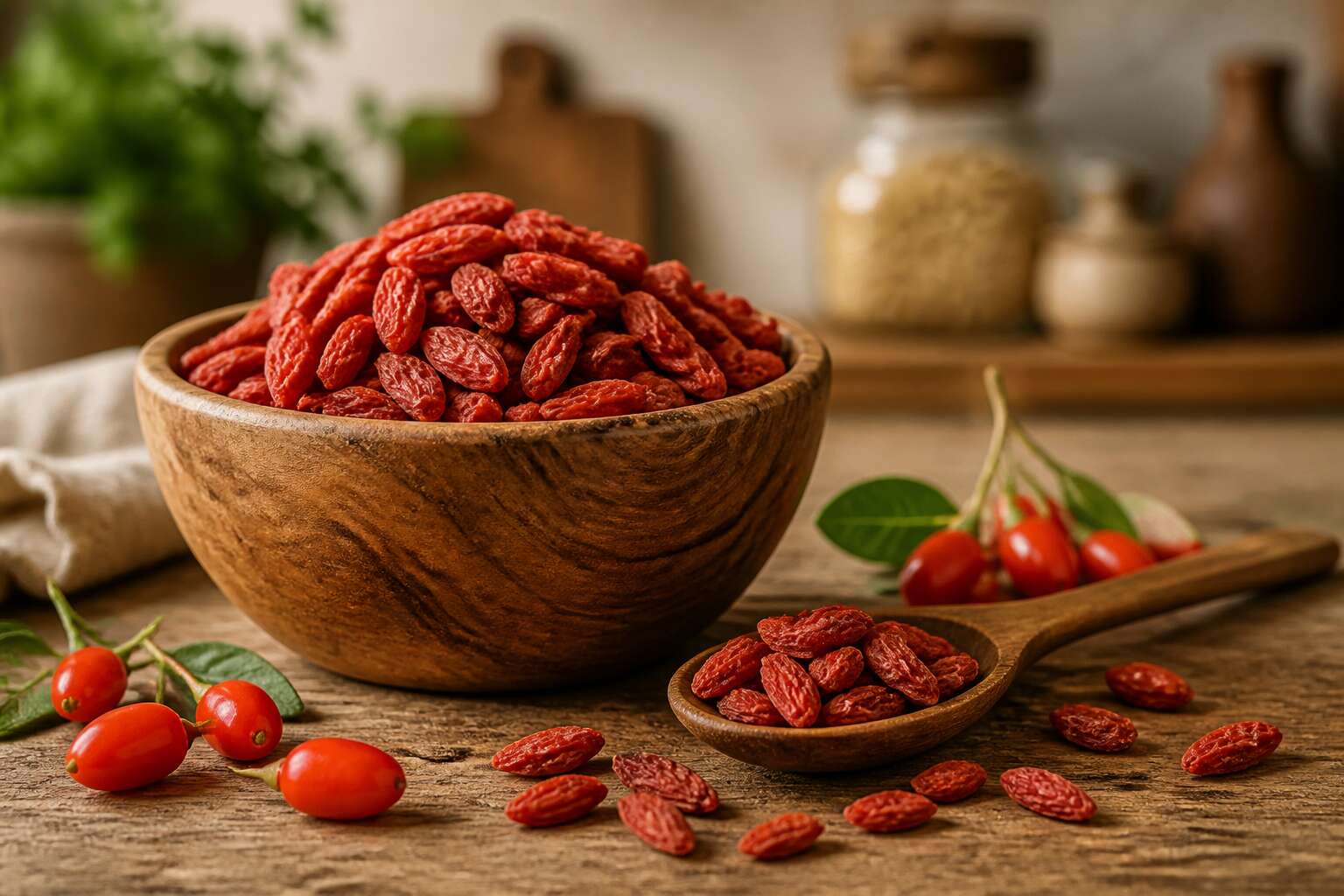
Exploring the Culinary Versatility of Goji Berries
From Breakfast Bowls to Desserts: Sweet Applications
Pastry chef Lindiwe Khumalo says, “Goji berries add a tart sharpness that lifts sweetness without overwhelming it.” Her enthusiasm reflects a growing trend of goji berries in food, particularly across South African patisseries. In my own kitchen, I have learned that these berries absorb surrounding liquids, turning from leathery to plump in minutes.
The rise of goji berries in food is most visible in breakfast bowls, where they lend a chewy pop to smoothie bowls and warm oats. I pair them with coconut yogurt, pumpkin seeds, and a drizzle of honey. For sweets, they shine in fruit compotes or soaked into rum for a boozy tart filling.
- Soaked goji berries folded into dark chocolate ganache
- Baked into buttermilk scones with macadamia nuts
- Simmered in rooibos syrup for a Cape twist on poached pears
The resulting desserts carry a muted sweetness that suits afternoon tea or evening dinner parties alike.
Savory Dishes and Sauces: A Subtle Tartness
In a jar of warm boerewors sauce, I watched goji berries in food turn from shriveled to glossy. Their tartness cuts through fatty meats. Across Cape Town kitchens, cooks add them to chutneys and pan juices. A chef once told me, “They are the quiet secret in my gravy.” The berries release a fruity depth that pairs with garlic and ginger. They work in stews, rice pilafs, and roasted vegetables.
- Simmer them in tomato sauce for a sweet and sour edge.
- Pulse with chilies and coriander for a vibrant salsa.
- Soak in apple cider vinegar for a quick pickle.
These uses build layers without masking the main ingredients. As with the sweet desserts, the berries absorb liquids, but here they add contrast to savory umami.
Rehydrating Goji Berries for Optimal Texture
Water temperature changes everything. Cold water keeps goji berries in food firm and chewy, perfect for grain salads. Hot water renders them plump and soft within five minutes. I learned this while testing batches for a Cape Town catering menu.
Soaking choices shape the final bite:
- Use cold water when you want the berries to hold their shape.
- Use warm liquid for quicker hydration, but do not leave them too long.
- Save the soaking liquid. It carries sweetness and colour.
The berries absorb roughly double their weight in water. That ratio matters for portion control and for balancing moisture in a finished plate.
Incorporating Goji Berries into Beverages and Tonics
Goji berries in food are usually eaten, not drunk, but steeping them changes their character entirely. A ten minute soak in hot water releases a tart sweetness that shifts depending on what surrounds it. With rooibos, it turns honeyed. With ginger, it sharpens. With citrus, it brightens. I keep a jar of dried berries beside my kettle and drop a spoonful into every pot of tea!
- Rooibos amplifies the berry’s honeyed side.
- Ginger cuts through its tartness.
- Citrus lifts the flavour without overpowering it.
After steeping, the berries turn plump and jammy, so I eat them straight from the cup. Every glass reminds me that these small berries have more than one life.
Nutritional Benefits and How Cooking Affects Them
Key Vitamins and Antioxidants Retained in Heat
Goji berries in food are remarkable survivors. Research from the University of Wageningen showed that oven drying at 70°C preserves nearly 80% of the berries’ zeaxanthin. That’s a compound your retinas will thank you for!
Cooking does reduce water soluble vitamin C, but the lipid soluble nutrients shrug off the heat. Carotenoids and polysaccharides retain their structure through gentle simmering, locking in benefits for your immune system. The key is embracing moderate heat, not rapid flash frying.
- Zeaxanthin bioavailability remains high after steaming
- Beta carotene becomes more absorbable when cooked
- Antioxidant polysaccharides tolerate slow cooking methods
Even a long braise doesn’t destroy these elements. So when you plan a hearty South African stew, goji berries in food offer a dependable nutritional anchor.
Pairing Goji Berries with Nutrient Enhancers
Goji berries in food demonstrate patience. Their carotenoids survive heat, but absorption depends on fat companions. A spoonful of olive oil or a wedge of citrus transforms the meal. Try these enhancers:
- Lemon for iron availability
- Almonds for vitamin E synergy
- Turmeric with black pepper for anti inflammatory effects
Cooking slowly preserves the polysaccharide chains. Rapid frying fractures them. So let the berries simmer inside a hearty potjie, then finish with raw spinach or fresh herbs. The berries release their nutrients into the liquid, which carries them deeper into your system. Pairing them with nutrient enhancers is not optional, it is practical. The right companions make those nutrients available to your body.
Balancing Sweetness and Health in Recipes
The average South African consumes 36 kilograms of sugar each year, yet goji berries in food can satisfy a sweet tooth with a fraction of that load. A modest portion delivers zinc, iron, and vitamin C. Their natural sugars intensify when simmered, allowing a cook to reduce added sugar by a third in compotes and stews. Prolonged boiling at high temperatures lowers the vitamin C content, so the berries are often stirred in during the final minutes.
Bitter greens or a squeeze of lime offset their honeyed sweetness. I often soak goji berries in rooibos tea, then use both liquid and fruit in a butternut soup. The tea’s vanilla notes blend with the berries, no brown sugar needed. This keeps the meal health conscious without losing the dessert experience.
For me, goji berries in food are a whole ingredient that asks for attention, not a background substitute.
Portion Control and Daily Intake Guidelines
The nutritional profile of goji berries in food shifts with preparation. Raw, they offer vitamin C and a full array of amino acids. Heat dismantles ascorbic acid, yet it releases lycopene and zeaxanthin from cell walls, making these carotenoids more absorbable. Simmering also liberates polysaccharides into the broth, turning stock into a functional base. The mineral content, iron and zinc especially, remains stable through boiling and baking.
Portion control hinges on concentration. Dried berries pack their nutrients into a small volume, so a 25 gram daily portion suffices. That is roughly two tablespoons!
- Raw: highest vitamin C, firm texture
- Simmered: carotenoids and polysaccharides released
- Baked: minerals intact, vitamin C reduced
I treat a serving of goji berries in food as a complement, not the foundation. Their sweetness intensifies with dehydration, so 25 grams carries more natural sugar than fresh berries, yet the fiber and protein slow absorption.
Why Soaking Boosts Bioavailability
Goji berries in food behave differently depending on how you prepare them. Raw berries supply ascorbic acid and amino acids. Heat degrades those, but it liberates carotenoids and polysaccharides, shifting the nutritional profile. Soaking offers a separate route. Rehydrating dried berries in water softens the cell walls, which increases bioavailability of water soluble nutrients without the losses that come from high temperatures.
The berries absorb water, expand, and release compounds into the surrounding liquid. That liquid holds value. Use it in soups or stews instead of pouring it away. Soaking also reduces the dry, chewy texture, making the berries easier to chew and digest. The result is a preparation that preserves heat sensitive elements while still making carotenoids accessible, though not as effectively as cooking does.
Cultural and Modern Influences in Goji Berry Recipes
Traditional Asian Culinary Uses
Goji berries have anchored Chinese kitchens for over two millennia, yet their role in food traditions remains a mystery to many Western cooks. In regions like Ningxia, these crimson fruits are less a garnish and more a cornerstone of daily cooking, simmered into silky chicken broths or steamed within lotus leaf parcels.
Traditional Asian culinary uses extend well beyond infusions. I keep returning to the classics:
- Adding handfuls to savoury congee for contrast
- Stuffing them into steamed buns with black sesame
- Pairing with ginseng and dates in slow-cooked soups
Modern Cape Town chefs now reinterpret these customs, pressing goji berries into sourdough or floating them in rooibos broths. The continuity is striking: goji berries in food still carry an ancient palate while absorbing new regional voices.
Western Superfood Fusion Ideas
The goji berry, once the guarded secret of Ningxia’s ferrymen, now travels a different river entirely. Western kitchens, hungry for provenance and pigment, have folded these rugged crimson ovals into granolas, smoothies, and even biltong spice rubs. Chefs in Cape Town press them into sourdough crumb, lending a faint, fruity tang that mimics sun-dried tomato but with a softer, almost floral finish.
What fascinates me is the syncopation of taste when goji berries in food meet local palate. A Johannesburg baker might steep them in rooibos for a morning loaf. A Durban cook could toss them into a chutney with coriander and green chilli. The berry holds its ground, neither sweet nor sour, but a dusky middle note that accepts both heat and honey.
- Fold rehydrated goji berries into a savoury oat topping for bobotie
- Grind them with salt and smoked paprika for a braai rub
- Stir into amasi or yoghurt for a sour contrast
The recent wave of Western superfood fusion ideas has dragged the berry from the pantry shelf into the limelight. It appears atop açai bowls, crumbled into energy balls, and whipped into frozen desserts where its chewy texture offers respite from creamy monotony. The irony is that this “superfood” behaves like a workhorse, adapting to any vessel with the humility of a good stock.
South African cooks, with their instinct for bold juxtaposition, treat goji berries in food as a quiet accomplice. They do not crown the dish. They deepen it. And that, I believe, is the truest form of modern influence: the berry no longer announces itself. It simply makes everything around it more interesting.
Practical Cooking Techniques and Flavor Pairings
How to Grind Goji Berries into Powders
Dried goji berries in food rarely get ground, yet the powder is one of the oldest kitchen shortcuts I know. A manual spice mill beats a blender here. It preserves the berry’s delicate aroma without heating it.
Work in small batches. Pour twenty grams of dried berries into the mill and pulse for ten seconds. Shake the chamber, then pulse again. Overworking creates heat, and heat clumps the powder into a sticky paste.
Sieve the powder and store it in a dark jar. It keeps its potency for two weeks. The powder’s tangy sweetness pairs well with smoked paprika, cumin, and cocoa. Use a quarter teaspoon per portion.
- Freeze the berries for thirty minutes before grinding.
- Pulse in short bursts, not a continuous run.
- Whisk the powder into oil or butter before adding liquid.
This is how cooks integrate goji berries in food as a dry seasoning for meats and vegetables.
Simmering and Infusing in Broths and Teas
I have learned that simmering goji berries in food releases their subtle sweetness without turning the liquid cloudy. Add them to a chicken broth fifteen minutes before the end of cooking. Their tart notes lift the umami of mushrooms and miso.
For a quick infusion, steep five grams in hot water with a slice of ginger and a star anise. The berries soften into chewy morsels. Strain them or leave them whole. The resulting tea carries a faint floral character.
Use a low simmer, never a rolling boil. Boiling makes the berries burst and dulls the flavor. Pair the liquid with cilantro stems or a twist of orange peel.
Matching Goji Berries with Spices and Herbs
Cooking with goji berries in food goes beyond steeping them in liquid. Crush the dried fruit with whole spices in a mortar and pestle. The berries release residual oils and stick to the particles of coriander, cumin, or fennel seed. This paste grounds a spice rub for roasted butternut or lamb chops on the braai.
I find the berries tolerate dry heat better than expected. Toss them with toasted cardamom and cinnamon bark for a few seconds. They puff slightly and develop a date-like character that pairs well with earthy herbs!
For herb pairings:
- Fresh thyme and marjoram amplify the tart, wine-like notes in goji berries in food.
- Mint and basil keep the berries bright in cold salads.
- Dried oregano brings Mediterranean structure to the sweet-tart contrast.
A pinch of ground white pepper lifts these berries more effectively than salt. The aromatic heat opens the flavor profile without fighting the fruit.
Using Goji Berries as a Natural Sweetener
Goji berries in food rarely serve as a primary sweetener, yet their concentrated sugars accomplish what many granulated alternatives cannot. When I simmer the dried fruit in a little water, the liquid turns amber and carries a gentle molasses note, perfect for drizzling over roasted pumpkin or morning oats.
The berry’s natural sweetness emerges through gentle heat. Folding chopped berries into a pear chutney allows me to halve the added sugar, while the residual tartness keeps the preserve balanced.
- Pan-roast whole berries in a dry skillet until they puff, then scatter over custard.
- Press a spoonful of berry paste into the centre of savoury muffins before baking.
- Simmer berries with fresh figs and lemon zest for a spoonable compote.
Each technique honours the fruit’s inherent sweetness without masking it.
Texture Contrast in Salads and Grain Bowls
Goji berries in food rarely get credit for their texture, but in a grain bowl they can hold their own against heavier ingredients. I like to scatter them over warm quinoa or barley, letting the residual heat soften their skins just enough. The chewiness remains, which is exactly what a bowl of soft grains needs. In a cold salad, a quick soak in warm water plumps them without turning them mushy. That firm bite stands up to crisp vegetables like cucumber or shaved fennel.
Some pairings bring out this quality well:
- Orange segments and toasted pumpkin seeds
- Shredded cabbage with a lemon tahini dressing
- Grilled halloumi and bitter rocket
The berries stay distinct in each case. They do not dissolve or dominate. Their presence is a reminder that goji berries in food work best when they keep their identity, a small, sweet contrast to everything else in the bowl.
Preserving Goji Berry Purees and Jams
Goji berries contain very little pectin, a fact that surprises most home preservers. I learned this the hard way when my first batch of goji jam refused to set! The solution is not complicated. Combine the berries with a high pectin fruit like apples, or add a splash of lemon juice. For purees, a slow simmer with a touch of sugar preserves the tartness without overwhelming it.
- Ginger and orange zest
- Star anise and honey
- Cloves and grated pear
These combinations let the berries shine. When stored in sterilised jars, goji puree keeps for months. A spoonful stirred into warm oats or brushed over roast chicken uses goji berries in food in unexpected ways. The preservation process changes their texture, but the unique tang remains intact.
Selecting, Storing, and Preparing High-Quality Goji Berries
Understanding Different Grades and Origins
Hundreds of tons of goji berries move through global trade each year, yet few buyers know their provenance. Selecting high quality starts with visual inspection. Look for uniform crimson color and a dry, slightly chewy texture. Avoid fruits that stick together or show faded hues, signs of moisture damage or age.
Storage affects flavor and shelf life. Goji berries in food need airtight glass jars away from direct light. A pantry works for three months, while refrigeration extends freshness to a year. Preparation involves rinsing quickly under cold water and patting dry; never soak them unless a recipe demands rehydration.
Understanding grades and origins clarifies expectations:
- Ningxia berries are large and sweet
- Tibetan berries are small and tangy
- Organic certification affects price, not always taste
These factors change how goji berries in food perform, which alters soaking times and sugar levels.
Proper Storage to Extend Shelf Life
Sunlight ruins goji berries. So does a warm kitchen cupboard. The crimson fruits turn leathery and lose their sweetness. Proper storage to extend shelf life is a matter of controlling light, oxygen, and humidity.
Airtight glass beats plastic; resealable bags let in oxygen and moisture. Once opened, move goji berries in food preparation to a Mason jar. Keep them cool and dark for short term use. The fridge extends freshness to a year; freezing turns thawed berries mushy.
Before using them, a quick rinse and pat dry is enough. Soaking changes their texture completely. Do that only when a recipe needs plump berries.
Watch for these spoilage markers:
- Faded, brick like color
- Berries stuck in hard clumps
- A sour or wine like smell
Any of those means the berries are past their best. After six months, older goji berries in food recipes still work, but the taste fades.
Cleaning and Pre-Treatment Steps
Buying goji berries in food markets, you rarely see the harvest date. That makes your fingers the first quality control. Pinch a few berries. They should give slightly, not crack. Their color stays uniform, a deep orange red. Pale spots or a dull finish signal age.
Cleaning begins at home. Spread the berries on a flat surface. Pick out stems, leaves, and any shrunken pieces. Rinse them in cold water quickly, no more than a few seconds. Lay them on a towel to air dry.
Pre-treatment steps for goji berries in food:
1. Sort through the entire batch.
2. Rinse under running water.
3. Dry completely on a clean cloth.
4. Keep them whole unless a recipe says otherwise.
A light prep preserves their natural bite and tartness. No soaking needed for most uses; just a clean, dry berry ready for the pan.
Common Mistakes to Avoid When Cooking
High quality goji berries in food deserve a gentle hand. I once simmered them too hard and watched their skins split, releasing a cloudy sweetness into the broth. That is the most common failure. A rolling boil destroys their texture. A low, patient simmer preserves it. Timing also matters. Berries added at the start infuse deeply; berries added near the end keep a plump pop of tartness and chew. Random timing produces neither.
The second set of errors involves perception. Buy goji berries in food stores sparingly if you cook rarely. Old stock turns brittle and dull. Moderately moist berries work well in teas and desserts, but dry, leathery ones need a brief soak to come back to life.
The third mistake is seasoning too early. Salt pulls moisture quickly and leaves the berries puckered and tough. Waiting until they soften changes the outcome entirely.



0 Comments