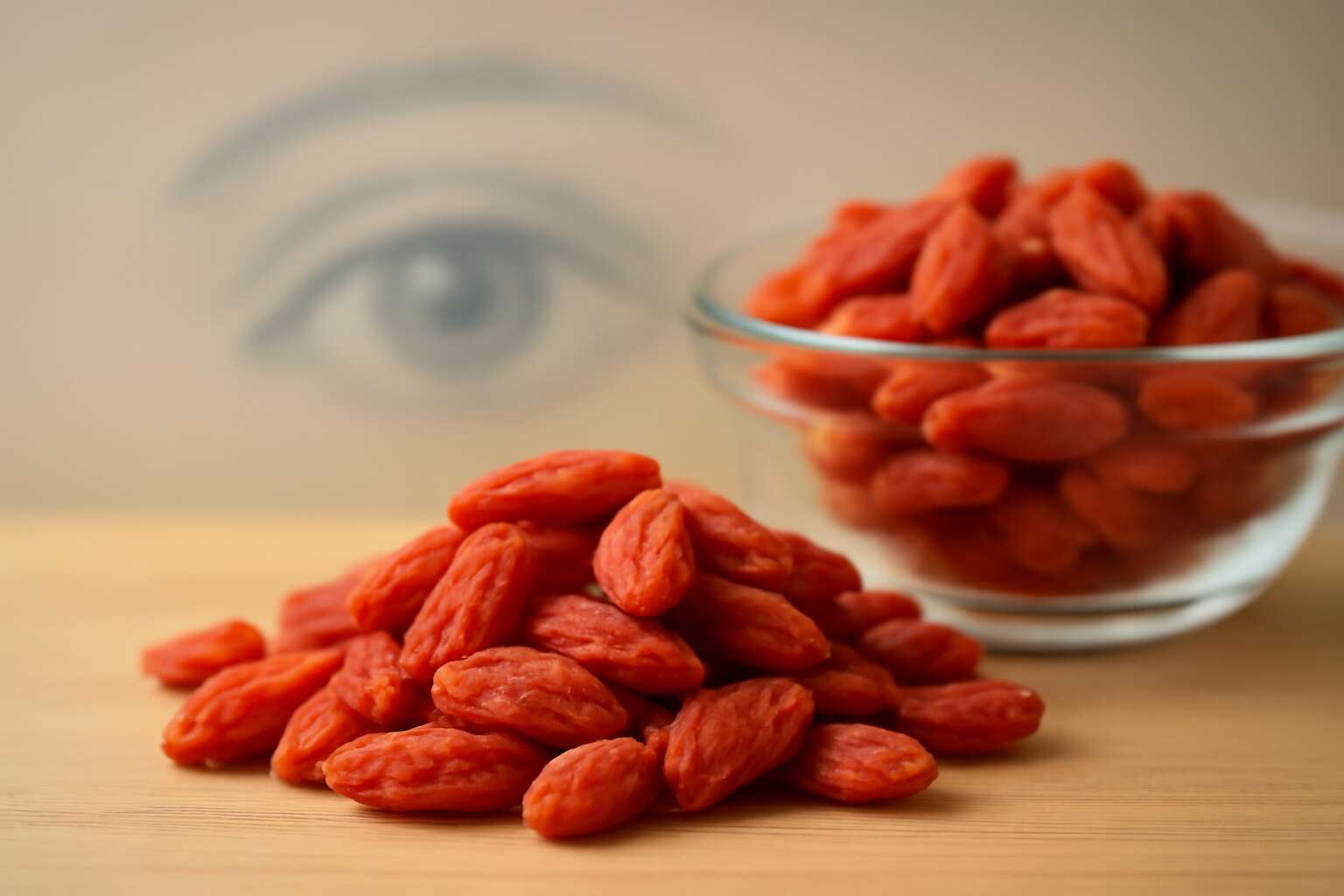
Goji berries and eye health: an overview
What makes goji berries eye-friendly
Eye health is nourished from the inside out! “Nutrition is the window through which vision looks out on the world,” a renowned researcher once said. In this light, foods with bright pigments and robust antioxidants become quiet sentinels for the retina.
Goji berries supply a spectrum of carotenoids, including zeaxanthin, along with vitamin C, all of which contribute to a nutrient-rich profile for eye support. goji berries for eye health are often highlighted for their potential to protect retinal cells from oxidative stress.
As with all botanicals, outcomes depend on the whole diet and individual biology. In my experience, these dried snacks carry a whisper of mystery. In South Africa’s markets, goji berries appear as dried snacks and ingredient accents, inviting curiosity and a touch of mystery into everyday eating.
Key nutrients for vision found in goji berries
“Nutrition is the window through which vision looks out on the world,” a leading vision researcher once said, and the lenses of your eyes respond to what you feed them. In South Africa’s markets and kitchens, goji berries for eye health emerge as a bright, ancient option that feels modern in a pinch-and-go culture.
These small red gems carry a spectrum of carotenoids, especially zeaxanthin, plus vitamin C and robust antioxidants. Together, they bolster the retina’s resilience against oxidative stress and keep light-drenched days from dulling clarity.
Key nutrients at a glance:
- Zeaxanthin and other carotenoids
- Vitamin C
- Polyphenols and antioxidant compounds
In practice, goji berries become a flexible addition to porridge, trail mixes, or baked treats, aligning with local tastes and seasons while supporting a balanced, eye-conscious diet.
How goji berries compare to other vision-support foods
“Nutrition is the window through which vision looks out on the world,” a leading vision researcher once said. Goji berries for eye health bring an ancient, bright option into today’s pinch-and-go culture in South Africa. They blend into porridge, trail mixes, and baked treats with ease, offering a distinctive carotenoid profile that supports retinal resilience without overwhelming meals.
- Leafy greens such as spinach and kale for lutein
- Fatty fish like salmon for DHA
- Bright citrus and peppers for vitamin C
In South Africa, this mix of convenience and nutrition makes goji berries for eye health a compelling addition to everyday menus, quietly supporting vision as days lengthen and screens stay bright.
Who might benefit from adding goji berries to their diet
“What you eat becomes the lens through which your days look,” a respected eye researcher notes. In South Africa, goji berries for eye health offer a bright, portable option that slips into porridge and trail mixes without drama.
These berries carry a distinctive carotenoid profile that supports retinal resilience and combats oxidative stress—handy for long hours before screens. For South Africa, they provide a convenient, tasty source of nutrients that blends into everyday meals.
- Busy professionals staring at screens
- Students burning the midnight oils
- Older adults safeguarding macular health
In a culture that prizes mobility and flavor, these berries quietly elevate the daily diet, leaving your gaze uncommonly alert to the horizon.
Nutrients in goji berries that support eye health
Beta-carotene and vitamin A precursors
What if a tiny, ruby-hued berry could guard your sight as steadfastly as a lighthouse guards a coast? In goji berries for eye health, beta-carotene and other vitamin A precursors take the spotlight, supporting the retina’s resilience and day-to-day vision.
Beta-carotene is a provitamin A carotenoid that the body converts to retinol, crucial for maintaining the surface of the eye. Goji berries offer a concentrated source, helping sustain this essential nutrient without turning to animal products. The goji profile also includes other provitamin A carotenoids that the body can transform as needed to support cellular health and immune defense.
To give readers a quick snapshot, consider the following provitamin A carotenoids commonly associated with goji berries:
- Beta-carotene
- Alpha-carotene
- Beta-cryptoxanthin
In South Africa, a handful of goji berries can slot into breakfasts or trail mixes, reinforcing goji berries for eye health as a practical, tasty nutrient source.
Carotenoids such as zeaxanthin and lutein in goji berries
Vibrant pigments aren’t just pretty—they shield sight. A dash of color in your diet can translate to sharper daytime vision and less glare. Carotenoids in everyday foods act like a natural filter, and goji berries offer a concentrated, plant-based dose ready to slot into South Africa’s breakfasts or trail snacks.
In goji berries, zeaxanthin and lutein sit alongside a spectrum of carotenoids that support the retina. They act as blue-light guards and help cushion the macula from oxidative stress.
- Zeaxanthin
- Lutein
Together with the other nourishing compounds, this makes goji berries for eye health a practical add-on to a balanced South African diet.
Antioxidants and protection against oxidative stress
Color is protection—the retina wears a living shield, and goji berries help polish its edges. Beyond the well-loved zeaxanthin and lutein, these berries host a constellation of antioxidants that fight oxidative stress at the cellular level. Vitamin C, flavonoids, and polyphenols work in concert to steady tissues facing blue light and glare.
- Vitamin C for cellular defense
- Flavonoids like quercetin and kaempferol
- Polyphenols that support antioxidant balance
- Minerals sustaining enzyme protective actions
Together, these nutrients weave a quiet resilience into the eye’s daily battleground. In South Africa’s vibrant kitchens, goji berries for eye health offer a plant-based ally, reinforcing a balanced day. The effect is softer glare, crisper contrast, and a brighter horizon.
Bioavailability and preparation methods
In the glow of South Africa’s mornings, I reach for goji berries for eye health as a quiet ally. Their riches extend beyond taste; when the body meets these nutrients with even a little fat, absorption becomes kinder. Gentle heat releases more of the berries’ restorative compounds, while keeping their color and character intact. Fresh, dried, or steeped as a light infusion, they weave into daily ritual with ease, a small luxury that steadies the eye’s daily dance.
- Rehydration and gentle infusion soften berries and release their compounds
- Pairing with healthy fats (olive oil or avocado) boosts absorption of fat-soluble components
- Blending into smoothies or adding to warm beverages supports effortless integration
In every kitchen, the quiet shimmer of these berries nods to a broader canvas of wellness.
Scientific evidence and traditional use
Traditional uses in eye care and traditional Chinese medicine
“The eyes are the gateway to the soul,” they say, and goji berries have long stood at the edge of tradition and science. Modern glimpses of science hint at protective pigments and antioxidant matrices that may support retinal longevity and everyday clarity—laying groundwork for goji berries for eye health to enter mainstream diets!
- Nourishing liver and kidney energy in traditional Chinese medicine to sustain vision
- Support for ocular moisture and tear film balance
- Synergy with chrysanthemum and other tonics for bright, clear eyes
In contemporary observations, these traditional practices echo in research that highlights carotenoids and other phytochemicals as contributors to retinal resilience, a narrative that resonates with South Africa’s diverse dietary culture and its appetite for evidence-backed, elegant nourishment.
Modern research on eye health outcomes
“The eyes are the gateway to the soul,” and modern science is taking that to heart. Emerging research on goji berries for eye health hints that carotenoids and polyphenols may bolster retinal resilience and everyday clarity.
Contemporary work connects these bioactives with photoreceptor protection and tear-film quality, weaving traditional use with measurable outcomes across diverse diets in South Africa.
- Macular pigment balance supported by carotenoids
- Antioxidant defense reducing retinal oxidative stress
- Potential improvements in ocular surface comfort and moisture
In South Africa’s vibrant dietary landscape, these berries can harmonize with local flavors without shouting.
Clinical studies and observed effects on vision
“The eyes are the gateway to the soul,” and goji berries for eye health enter that doorway with quiet confidence! Modern science points to carotenoids and polyphenols as allies of retinal resilience, while traditional use frames a daily, gentle tonic that tunes vision to life.
Scientific evidence and traditional use reveal a duet: goji berries for eye health have long served as pantry staples and nutrient sources, supporting cellular defenses against oxidative stress. In trials and in South Africa’s diverse kitchens, observers note hints of steadier macular pigment and calmer ocular surfaces, a promise for everyday clarity.
Clinical studies and observed effects on vision include several tangible outcomes:
- Enhanced photoreceptor protection under bright light
- Improved tear-film quality and moisture balance
- Subjective improvements in comfort and everyday sharpness
Limitations and what remains uncertain
‘The eyes are the gateway to the soul,’ and goji berries for eye health enter that doorway with quiet confidence. Scientific evidence hints at carotenoids and polyphenols offering retinal support, but the full story is not written. In South Africa, researchers notice emerging signals—smoothed oxidative stress markers and more stable tear film—yet long-term data and product standardisation are still elusive!
- Inconsistent product quality and lack of standardisation between dried berries, powders, and supplements.
- Small sample sizes, short durations, and varied designs limit conclusions about long-term eye health outcomes.
- Dietary and genetic diversity in South Africa can affect carotenoid absorption, narrowing generalisability.
Uncertainty remains a driver for measured curiosity; the potential is real, but patience is required as science continues its careful counting of results.
Practical guidance for using goji berries for eye health
Daily intake recommendations and serving sizes
Global health data remind us that up to 80% of vision impairment is preventable, a compelling reminder that everyday choices matter. In my kitchen and in rural South Africa, goji berries for eye health become a tactile habit—small, bright, and hopeful—that fits into busy days and shared meals.
Daily intake varies, but the idea is steady, not extreme. A practical approach is to choose one of these simple options:
- 20–25 g of dried goji berries (about a small handful) per day
- 10–15 fresh goji berries daily
- One cup of goji berry tea per day
Pair your goji berries for eye health with a balanced diet rich in leafy greens and colorful fruit. I keep a jar on the counter, and a bowl of them invites a mindful moment between chores.
Ways to incorporate goji berries into meals
With 80% of vision impairment preventable, every bite can feel like a small act of resilience. goji berries for eye health can slip into busy days as a bright, hopeful ritual that fits a South African kitchen—simple, savoury, and uplifting.
- Stir dried goji berries into oats or yoghurt for texture and a natural sweetness
- Blend fresh berries into smoothies with spinach and citrus for a vitamin boost
- Steep them in rooibos or green tea for a warm daily infusion
Keep a jar on the counter and pair them with leafy greens for a steady rhythm of nourishment, turning a quick snack into a moment of care for your eyes.
Quality considerations: sourcing and product forms
In South Africa, quality sourcing can transform goji berries for eye health from garnish to daily ally.
When choosing product forms, dried berries retain beta-carotene and zeaxanthin better than most juices; powder and capsules offer convenience for smoothies and sauces.
- Organic certification and clear origin (country or region)
- Minimal processing: no sulfites or artificial additives
- Dark, airtight packaging with a visible best-before date
In SA, buy from reputable retailers and verify batch numbers or QR codes; store in a cool, dark place.
Safety, allergens, and potential interactions
Goji berries for eye health deserve careful handling. ‘Eyes are the body’s compass,’ a nutritionist rightly notes, so safety matters more than novelty. If you’re on anticoagulants, monitor vitamin K and discuss changes with your clinician. Start with a tiny portion and watch for GI upset, itching, or swelling. Choose minimally processed forms and clean packaging to avoid contaminants.
- Allergies and sensitivities: begin with a small amount; stop if you notice itching, rash, or digestive distress.
- Medication interactions: vitamin K can affect blood thinners; consult your doctor if you take warfarin or similar drugs.
- Safety and quality: choose organic-certified products with no added sulfites or artificial sweeteners; discard if packaging is damaged or aroma is off.
Used thoughtfully, goji berries for eye health can brighten smoothies and sauces. For goji berries for eye health, moderation is key.
Goji berries among other eye health nutrients and supplements
Goji berries versus lutein and zeaxanthin supplements
Global vision impairment affects about 2.2 billion people, and nutrition matters more than many realise. I see goji berries for eye health sit alongside lutein-focused options as part of a broader, food-first approach to eye support.
Unlike isolated lutein and zeaxanthin supplements, goji berries contribute a natural matrix of carotenoids and antioxidants that may work together in the body. In South Africa, where fresh produce can be seasonal, dried goji berries offer a convenient option that fits into snacks or trail mix.
Compared to supplements, the synergy of compounds in goji berries may influence oxidative protection and support microvascular health in the eye.
- Whole-food matrix vs single-nutrient supplements
- Broader carotenoid and polyphenol mix
- Practical daily intake through snacks
Ultimately, the choice between goji berries and targeted lutein/zeaxanthin products depends on goals and diet, not a single miracle ingredient.
Goji berry products: powder, capsules, and blends
In a landscape of eye-nourishing options, goji berries for eye health sit alongside lutein and zeaxanthin supplements as part of a broader, food-first approach. Unlike isolated nutrients, goji berries bring a natural matrix of carotenoids and antioxidants that may work together in the body, supporting oxidative protection and microvascular health.
Goji berry products come in convenient forms to suit different routines.
- powder for smoothies and cereals
- capsules for on-the-go supplementation
- blends that pair goji with greens or other eye-friendly ingredients
For South African kitchens and seasonal produce realities, dried goji berries offer a handy option, weaving into snacks and trail mixes.
The choice rests on goals and diet, not a single miracle ingredient.
Synergistic foods and dietary patterns for eye health
Eyes are not solitary organs but athletes of the diet—every bite can tilt the balance toward clearer vision. goji berries for eye health sit at the crossroads of flavor and function, complementing lutein and zeaxanthin with their own carotenoid matrix that supports oxidative protection and microvascular health.
To maximize synergy, pair goji with foods that support the same microvascular and antioxidant goals:
- Leafy greens (spinach, kale) rich in lutein and zeaxanthin
- Orange and yellow vegetables (carrots, sweet potatoes) with beta-carotene
- Fatty fish or flaxseeds for omega-3 fats
- Citrus and berries for vitamin C and polyphenols
In South African kitchens, dried goji berries offer a handy option, weaving into snacks and trail mixes while seasonal greens and legumes round out daily meals.




0 Comments