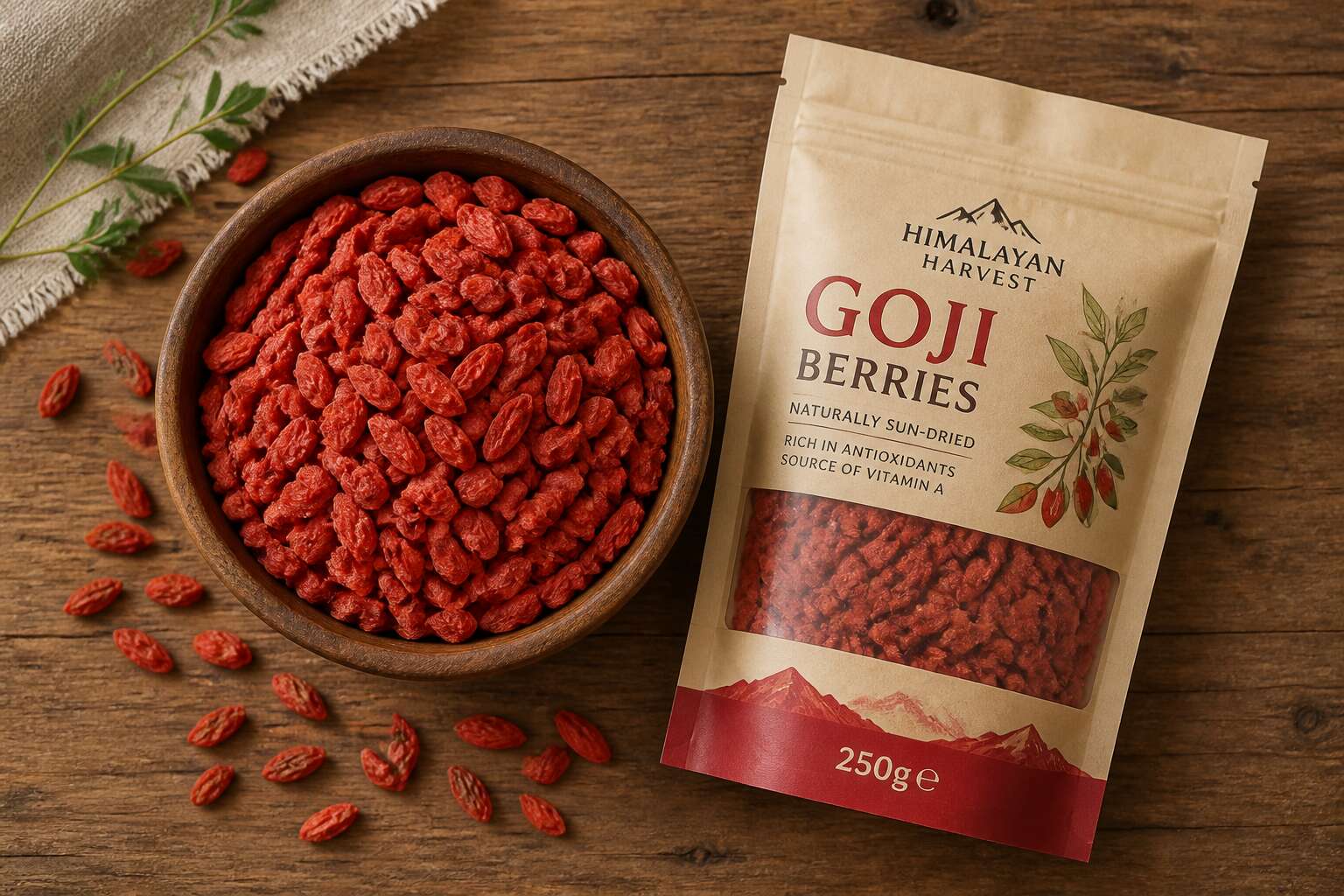
Nutritional Breakdown of Dried Goji Berries
Key Vitamins and Minerals in a Handful
One modest handful of dried goji berries, roughly 30 grams, carries more vitamin C than a whole orange, which still surprises many shoppers. For South Africans eyeing pantry efficiency, the resealed bag of goji berries 250g solves portion control neatly, yielding eight generous handfuls. Within that small serving, you also get iron for oxygen transport and zinc for cellular repair.
The mineral footprint deserves attention:
- Calcium for bone fortification
- Potassium for maintaining healthy blood pressure
- Selenium for antioxidant protection against oxidative stress
Drying concentrates these nutrients, meaning a light sprinkle delivers meaningful value. Keeping this specific pack available turns a simple snack into a deliberate nutritional choice, no elaborate preparation required!
Antioxidant Content and Cellular Protection
Lab analysis of dried goji berries shows an ORAC value above 3,000 units per 100 grams. That score means these berries attack free radicals at the cellular level. No smoothie rituals needed here, just grab a handful from your goji berries 250g bag and let the antioxidants do their job.
The protective mechanism relies on two unsung compounds:
- Zeaxanthin, a carotenoid that defends retinal cells from blue light damage
- Polysaccharides, which regulate immune cell communication
Both compounds remain stable through drying, so the sealed pouch keeps its potency. Every serving from that same bag delivers this defence while you move through your day. That is real protection for South African living!
Caloric Density of a 250-Gram Package
A sealed bag of goji berries 250g holds roughly 900 calories. That figure scares people until they measure the actual serving. Ten handfuls per bag, about 90 calories each. No oils, no sugar coatings, just the fruit’s own natural energy.
The macronutrient profile is unusual for dried fruit:
- 14% protein, a level you expect from nuts
- 75% carbohydrates, mostly glucose and fructose
- 10% dietary fibre, which blunts sugar spikes
That fibre changes how your body handles the calories. Regular dried fruit hits the bloodstream fast. Goji berries release energy slowly, so that 90-calorie handful keeps you satisfied longer than a banana.
I’ve opened a fresh goji berries 250g bag more times than I can count. The portion control challenge is real! But knowing the caloric density per gram helps. One small handful, roughly 30 grams, sustains a morning walk.
Comparing Raw vs. Dried Nutrient Levels
Raw goji berries are a fleeting commodity. Most South African shoppers encounter only the dried form in a goji berries 250g packet. The drying process removes roughly 80% of water, which concentrates sugars and proteins while diminishing vitamin C. Surprisingly, carotenoids survive dehydration better than fragile B vitamins.
Consider these shifts between raw and dried:
- Protein rises from 11% to 14% per dry weight.
- Vitamin C drops by nearly 60%.
- Iron becomes more bioavailable after drying.
I find that goji berries 250g bag lacks the delicate sourness of fresh fruit. Still, the dried version offers a stable nutrient profile for pantry storage.
Smart Ways to Add Goji Berries to Your Meals
Morning Oatmeal and Smoothie Boosts
Few breakfasts offer such effortless variety as a simple bowl of oats. A goji berries 250g pack sits in my pantry, ready to transform the mundane. I drop a small handful into the pot as the oatmeal simmers. The warm liquid softens their chewy texture, releasing a gentle sweetness without needing extra sugar. For smoother days, I toss the berries straight into the blender with frozen mango and Greek yoghurt. The result is a creamy, bright pink smoothie that feels like a quiet morning adventure.
Here are two pairings I return to often:
– Oatmeal with goji berries, toasted almonds, and a drizzle of maple syrup.
– A smoothie blending goji berries, fresh ginger, pear, and oat milk.
Each goji berries 250g bag covers several weeks of breakfasts, which makes experimenting easy. You can also fold them into plain porridge after cooking, keeping their texture more defined. The berries absorb liquid differently depending on when you add them, so play with timing to match your preference. Small adjustments create distinct meals from one simple ingredient, giving your mornings a sense of possibility.
Trail Mix and Energy Bite Creations
Most trail mixes are predictable, dominated by chocolate and peanuts. A goji berries 250g bag disrupts that routine. The dried berries offer a leathery chew and a faint tartness that cuts through salt.
I make a simple mix with roasted almonds, unsalted cashews, and a generous handful of goji berries. They clump together when left too long, so I shake the container each morning. The texture keeps each handful interesting.
For energy bites, I pulse the berries in a food processor with dates and oats, then roll the mixture into small balls. The berries lend subtle sweetness and a speckled appearance.
- Trail mix for hikes and long workdays
- Energy bites for post-exercise recovery
Each batch uses roughly a quarter of a goji berries 250g pack. That covers two weeks of snacks.
Savory Dishes and Salad Toppings
Dried fruit often ends up in sweets. Goji berries work differently. In South African kitchens, where braai smoke and spicy chakalaka dominate, a goji berries 250g pack adds depth to savory cooking. The berries soften in stews, releasing a mild tang that balances rich meats. I toss them into butternut soup for texture.
For salads, they work best unsoaked, offering a leathery chew against crisp greens. A handful over roasted beetroot and feta transforms the plate. Consider these applications:
- Add a tablespoon to chicken curry during the last five minutes of cooking
- Mix into couscous with fresh coriander and lemon zest
- Scatter over a green salad with toasted sunflower seeds
The goji berries 250g format suits experimentation. One bag lasts through multiple recipes, allowing daily variation without waste.
Baking with Rehydrated Berries
Most dried fruit softens in batter; goji berries resist until soaked. Rehydrate them first and they plump into soft, tart pieces that keep their texture through a full bake. I always start with warm water and a goji berries 250g pack, letting the berries sit for ten minutes before draining.
I use them in dense loaves and scones where heavy fruit belongs:
- I fold rehydrated berries into a date and oat loaf for extra chew
- I stir them into banana bread after the flour is mixed
- I add a spoonful to shortbread dough for a tart surprise
The reserved soaking liquid tints bread dough a pale rose and carries a mild sweetness that reduces the need for extra sugar.
Teas and Infused Water Recipes
Steeping a goji berries 250g pack in hot water unlocks a different character than chewing them dry. The liquid turns amber and carries a faint, earthy sweetness. I pour this over fresh mint or a slice of ginger for a tea that warms without heaviness. The berries themselves soften, but keep a slight bite, perfect for fishing out with a spoon.
For infused water, I use cold steeping overnight. A handful in a jug with cucumber ribbons and lemon rind gives a subtle tartness. The berries sink and release their pigment slowly.
- Add a tablespoon to rooibos for a local twist
- Mix the soaked berries into plain yogurt for a textural contrast
I find that a goji berries 250g pack lasts weeks when used sparingly in drinks. The residual berries after a warm steep are excellent scattered over a simple rice dish, though that borders on another topic entirely. The colour alone is worth the patience!
Storage Practices for Long-Lasting Freshness
Airtight Container Options
A sealed glass jar changes everything for your goji berries 250g. In South Africa’s humid coastal regions, moisture causes rapid spoilage. Once opened, the original plastic bag allows air and humidity to reach the fruit.
Transfer the berries to a clean, dry container. Airtight options work best for preserving texture and taste.
- Canning jars with two piece lids
- Vacuum sealed containers
- Dark glass jars with silicone gaskets
Place the container in a cool, dark cupboard, away from the stove or kettle. Check for condensation weekly. If any appears, dry the berries immediately. Proper storage keeps the goji berries 250g plump and sweet for months.
Cool, Dark, and Dry Conditions
South Africa’s summer heat can turn a vibrant package of goji berries 250g into a sad, shriveled memory within weeks. The true enemy is ambient warmth, which accelerates oxidation and robs the fruit of its chewy succulence. A cool pantry, ideally below twenty degrees Celsius, preserves the natural sugars and keeps each berry pliant.
Darkness matters just as much. Ultraviolet light breaks down the carotenoids that give goji berries their deep orange hue. A closed cupboard or a shaded shelf prevents this slow degradation. Dryness is equally critical. Humidity above sixty percent invites mold spores to settle on the surface, while completely arid air maintains that desirable leathery texture.
- Monitor the room temperature during summer heatwaves
- Choose a spot far from any steam-producing appliances
- Keep the package elevated off concrete floors
I have found that for a 250g stash, these habits ensure months of reliable quality. The goji berries 250g remain plump, fragrant, and ready for your morning ritual, no matter what the weather outside decides to do!
Refrigeration vs. Pantry Storage
Refrigeration appears obvious for South African summers, yet the cold air inside the fridge pulls moisture from the berries, turning supple fruit into brittle flakes. Condensation forms each time the container opens, and that thin layer of humid air settles onto every berry. A goji berries 250g stash faces this moisture risk with every fridge visit.
Pantry storage preserves the original plumpness, provided the room temperature stays consistent. Fridges cycle through temperature swings with every door opening, and those swings destabilize the oils within the fruit. My rule of thumb:
- Two months or less, pantry wins
- Longer than that, refrigerate and accept texture changes
- Humid fridge, stick with the pantry
For most households, a sealed container in the pantry keeps the berries pliant and fragrant. Refrigeration only stretches the shelf life of goji berries 250g, and that extension costs you the satisfying chew!
Identifying Spoilage and Expiry Cues
An unopened sleeve of goji berries 250g can outlast the season, but once the seal breaks, storage matters. South African kitchens carry a particular humidity that encourages invisible mould between the folds of dried fruit. I rotate my stash every two weeks, shifting older berries to the front and placing fresh stock behind. This simple rhythm prevents the disappointment of discovering a hardened clump at the jar’s bottom. Berries also absorb neighbouring spices, so keep them away from the curry powder and rooibos.
Spoilage announces itself through texture and scent. Fresh dried berries remain pliable, while expired ones crack under gentle pressure. A sour or fermented aroma replaces the sweet, earthy fragrance. White webbing on the surface signals mycotoxins, not harmless sugar. Check each of these cues:
– Press a berry, it should spring back
– Smell the opened container after six weeks
– Look for dark patches or sticky residue
When one cue appears, discard the whole batch. A well-maintained goji berries 250g stash keeps delivering that satisfying chew.
Extending Shelf Life with Freezing
At minus eighteen degrees Celsius, a sealed portion of goji berries 250g keeps its character for nearly a year. Freezing slows oxidation, preserving the red pigments and the chew. I spread fresh berries on a tray before bagging them, so they stay separate instead of fusing into one mass.
Three habits protect frozen fruit:
- Use freezer-safe glass or thick plastic
- Press out excess air before sealing
- Keep the package away from raw meat drippings
Frozen berries drop straight into hot porridge or a blender without thawing. For baking, allow them to warm gradually to avoid excess moisture. A goji berries 250g portion stored at minus eighteen degrees Celsius outlasts most pantry arrangements, though the texture does soften upon thawing. That compromise is acceptable when summer berries are nowhere in sight.
Portioning a Bulk Package for Daily Use
A 250g package invites recklessness. The prudent cook, however, treats the bulk package as a ledger to be balanced, not a sack to be plundered. I decant goji berries 250g into small glass jars, each holding one measured serving. Sunday evening yields five neat jars, and the week proceeds without negotiation. This ritual imposes a pleasing order upon the kitchen counter.
The untouched portion stays sealed in its original packaging, safe from ambient humidity. Open jars release moisture; closed jars do not, a simple law of physics that many pantries ignore. For the South African climate, where summer heat tests every shelf, this division of goji berries 250g into single servings protects texture and flavour. The jars rest in a dark cupboard, each one a small promise of sweetness.
Selecting Premium Quality Berries
Visual Indicators of Freshness
The colour of your goji berries 250g package tells you more than any label ever will. Premium quality berries display a vibrant, uniform red-orange hue. Dull or brownish tones often signal age or poor drying processes. I look for berries with a slight natural wrinkle, not shriveled or cracked. They should feel dry to the touch but remain somewhat pliable, indicating proper moisture retention.
Consider these freshness indicators:
– Bright, consistent colour across the batch
– Intact skin without excessive breakage
– No visible clumping or sugar crystallisation
A goji berries 250g purchase with these visual markers will deliver better texture and taste in every recipe. If the berries appear dusty or emit an off smell, leave them on the shelf. Freshness begins with what you see.
Texture and Taste Expectations
The package crinkles as I press my thumb against a single berry. A premium quality goji berries 250g lot should yield slightly, then return to shape without sticking to my fingers. That texture is the entire story. The skin remains taut, almost leathery, while the inner flesh gives way with a soft, chewy resistance. Taste follows the same reliable rhythm: immediate sweetness, a golden grape nuance, then a sharp, tangy finish that catches the back of the tongue. Nothing bitter, nothing flat.
Some commercial batches taste dusty, like the berries lost their essence somewhere in processing. You do not want that. You want each bite to offer a consistent experience, because that consistency tells you how the harvest was handled. When the quality is right, there is no chalky aftertaste and no hard, woody core. The flavour feels alive. Consider the markers that separate a decent snack from a haunting one:
1. A supple, chewy mouthfeel that does not dissolve into mush
2. A sweet tart balance with a subtle wine like depth
3. A dry exterior that still releases a burst of fruitiness when bitten
Every handful should behave exactly like the last, which is what makes a goji berries 250g packet worth trusting. Texture and taste are not separate concerns. They are the final proof of careful drying, and once you know that proof, your standards will never drop again.
Organic vs. Conventionally Grown Options
I have opened more goji berry packets than I care to admit. The organic versus conventional debate matters, especially for a goji berries 250g purchase. Organic farms must prove their soil health, which often results in a more robust berry.
Conventional growing allows synthetic inputs. That does not automatically mean poor quality, but it introduces variables.
- Look for organic certification marks
- Check the harvest year on the package
- Smell the berries before buying
My preference leans organic when the price difference is small. You want consistency, and organic lots tend to deliver that more reliably.
Understanding Country of Origin Labels
A goji berries 250g packet reveals more than its harvest date. The country of origin shapes flavour, texture, and nutrient density more than any other factor. Ningxia berries from China carry a dense, sweet profile, while Himalayan sources offer a slightly more tart character. South African shelves stock both, so reading the label matters.
Premium berries feel dry to the touch, never tacky. They snap rather than bend under pressure. The colour remains deep crimson throughout the bag, not faded at the edges.
- The province or region named on the label
- Whether the packer identifies the grower
- The import date, separate from the best before date
Origin transparency separates premium lots from commodity bulk. A goji berries 250g package that names a specific growing region gives you a baseline for consistency across repeat purchases.
Sourcing from Reputable Suppliers
A single, careless supplier can undermine an entire batch of premium product, regardless of how meticulously you inspect the final package. Navigating the goji berry market requires more than a cursory glance; it demands a deliberate examination of the supply chain itself. A goji berries 250g pouch is only as trustworthy as the hands that cultivated and processed its contents, from the foothills of Ningxia to the packing facility.
Reputable suppliers offer a transparent documentation trail that traces the product’s lineage. When you request these records, you are not just performing due diligence; you are actively distinguishing between a commodity and a curated harvest. Look for a supplier who can articulate their quality control measures without hesitation, demonstrating a clear understanding of moisture levels and contaminant screening.
Here is what a responsible supplier should readily provide:
– Lab reports verifying pesticide residues and heavy metals, ideally from a third party.
– A clear, traceable path from the specific farm to your distribution center.
– Consistent batch codes that align with their internal quality audits.
Ultimately, the reliability of a goji berries 250g source is visible in their commitment to consistency. The finest berries maintain a uniform texture that holds up, from the initial bite to the final rehydration. A supplier who understands this nuance will never compromise on sorting standards. When you find a partner who values this level of detail, you secure a stable, superior product that your customers will recognize and trust with every single purchase.
Daily Wellness Routines with a Large Supply
Serving Size Guidelines for Adults
Daily wellness routines fail when portion sizes remain a mystery. A goji berries 250g package offers a clear framework for adult portioning. The standard adult serving of dried goji berries sits at 30 grams. That modest amount delivers concentrated nutrients without excess sugar or calories.
Within a goji berries 250g package, an adult can expect roughly eight servings. This matters for planning. Spread one serving across a morning snack or an afternoon pick-me-up, and the package sustains you for over a week. The psychological benefit is real. Knowing the package has a defined number of servings prevents mindless overeating and encourages deliberation.
Adults often struggle with portion distortion, especially with dried fruit. A 30 gram serving is smaller than it appears in the hand, yet it satisfies. Consistency in daily intake, rather than occasional binges, supports stable energy levels and mindful consumption.
Pairing with Other Superfoods
A goji berries 250g pack fits neatly into a South African morning ritual. You measure thirty grams once, then trust the routine. This steady daily serving creates a rhythm that reduces decision fatigue and keeps your wellness practice grounded.
Pair these berries with complementary superfoods to amplify their presence. Rooibos tea soaks them softly. Moringa powder adds a green note. Chia seeds offer texture and omega 3.
- Sprinkle goji berries over a bowl of amasi and toasted oats
- Blend them into a smoothie with baobab powder
These combinations rotate easily, so a single goji berries 250g package never feels monotonous. You consume it across several weeks, and each pairing introduces a new sensory angle.
Herbal and Traditional Uses
A 250g pouch holds roughly thirty servings of goji berries. That quantity changes the relationship between you and the ingredient. Instead of a stringent project when you need to finish before the berries deteriorate, this supply permits a slower acquaintance. You have the space to test different applications without squandering the batch.
Traditional use presents an interesting angle. In various folk practices, goji berries were prepared as a tonic, not merely as a snack. The berries were steeped in hot water or added to simmered broths to extract their essence. You can mirror this approach effortlessly. Place a small handful in a cup of boiled water for ten minutes, then drink the liquid and eat the softened fruit. Doing this daily becomes a quiet practice, a specific point in the day where you pause from speed and participate in something sustained.
A long-term supply also enables you to build consistent patterns around specific moments. Consider these habitual applications for your mornings or evenings:
- Add a measured portion to your tea pot when preparing a pot of rooibos for the afternoon.
- Keep a small bowl filled on your workspace so you incorporate a few berries into your mid day break.
- Use a tablespoon as part of a relaxing night ritual, paired with a warm glass of milk.
This approach transforms the goji berries 250g pack from a static product into a foundation of your daily schedule. The repetition matters. When a ritual becomes a routine, you stop thinking about the mechanics and simply participate. The berries become a consistent presence, offering subtle support that you eventually notice through its steady consistency. Even a modest portion taken daily, over the course of weeks, builds a familiar connection. Dried goji berries rehydrate gradually in your digestive system, so a small serving goes far. The real advantage of the 250g package is not the thought of its size, but the liberty it provides to weave multiple pleasant interactions with the fruit into your regular life, letting the practice itself become the point.
Potential Side Effects and Precautions
A goji berries 250g pouch supports daily wellness without demanding daily decisions. The ample supply means you can take a small portion each morning, whether added to yogurt or eaten on its own. This consistency builds a sustainable habit over weeks, and the large quantity removes the fear of running out mid-routine.
Still, side effects require attention. Goji berries interact with blood thinners and blood pressure medication. Individuals with pollen allergies should start with a tiny amount to gauge sensitivity.
Consider these precautions before making them a staple:
- Eat no more than a handful per day, as excess fiber may cause digestion discomfort.
- Check dried berries for added sugars or sulfites, which can undermine their benefits.
- Consult a doctor if you are pregnant, nursing, or managing diabetes.
The goji berries 250g package gives you room to adjust portions safely while you learn your personal tolerance.
Budget-Friendly Ways to Consume Regularly
With that safety net in place, the real work of integrating this fruit into your day begins. A goji berries 250g pouch becomes less of a novelty and more of a trusted pantry staple. The volume encourages a different mindset. You are not rationing a precious commodity; you are working with a reliable resource that allows for experimentation.
This is where the economics of the larger package become clear. The price per serving drops significantly when you buy in this quantity. For the budget-conscious, this means you can afford to be generous. Sprinkle a portion over morning muesli, or stir a handful into a pot of warm porridge just before serving. The berries soften and release their sweetness without needing any extra sugar.
For those who prefer a no-fuss approach, the routine can be as simple as keeping a small bowl on the kitchen counter. You can grab a few as you rush out the door. To keep the cost per use low and the habit interesting:
– Mix the goji berries 250g with plain, unsalted nuts and seeds for a custom trail mix.
– Blend a small handful into a weekday smoothie to add texture and a mild, tangy flavour.
– Brew them in a pot of rooibos tea for a naturally sweet afternoon break.
These methods turn the larger supply into an advantage. It becomes the foundation for a daily practice that is both affordable and adaptable. The risk of waste is low because the portion size is easy to control while the overall stock remains generous. This balance between abundance and moderation is the quiet strength of buying in bulk.

0 Comments