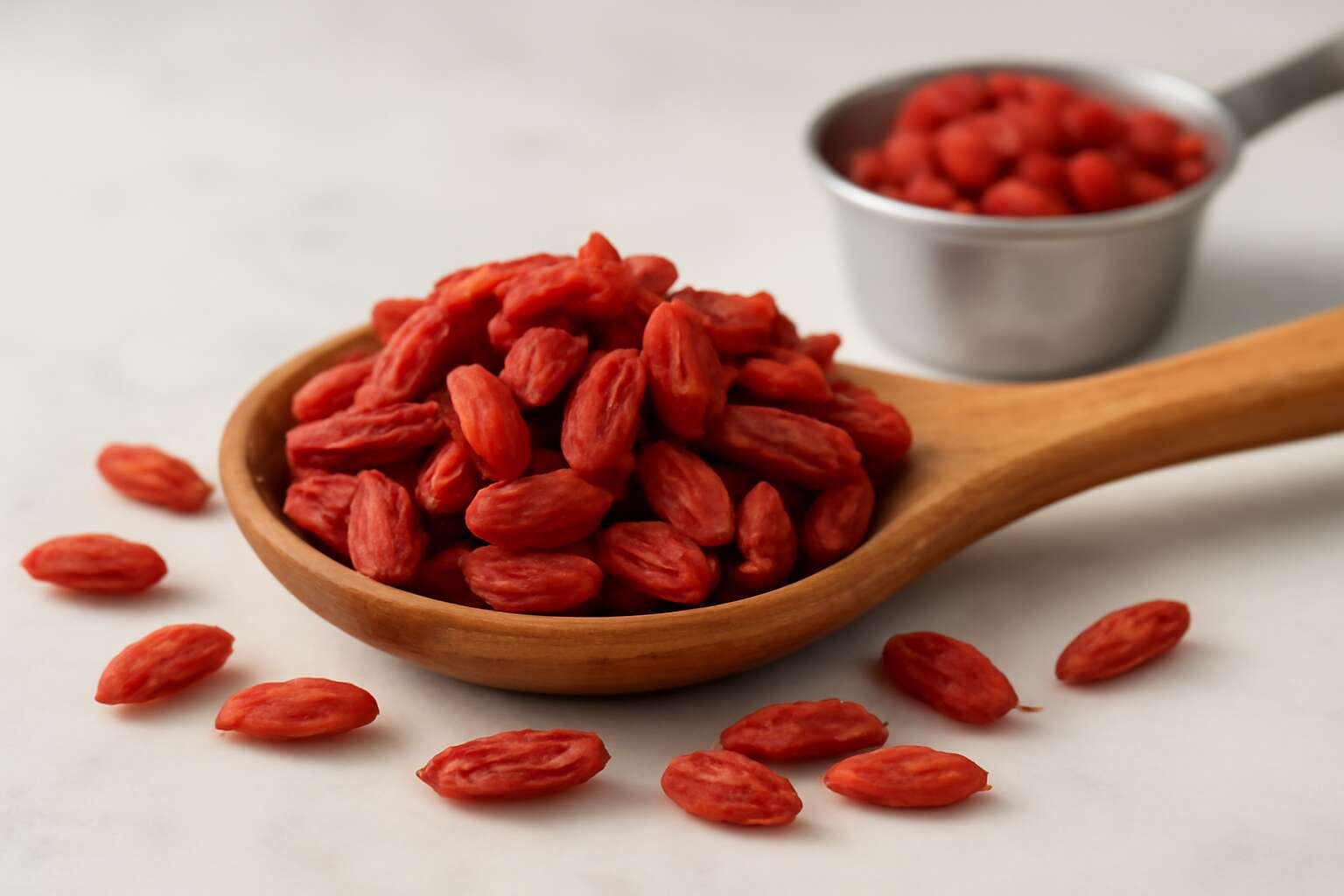
Goji Berries Serving Size Basics
Recommended daily serving size in grams
In a sunlit kitchen along the South African veld, goji berries carry big stories in a tiny package. A handful can wake porridge, yogurt, or tea with a sweetness that’s honest and bright. how much goji berries often becomes more than a question of measurement—it is a reflection on balance, texture, and the grace of everyday cooking that travels from farm to table.
Serving size basics are simple and humane. The recommended daily serving size in grams typically sits around 10 to 20 g, roughly a small handful, and it slips easily into cereals, smoothies, or baking without overpowering other flavors.
- About 10 g per day
- 15 g for a slightly sweeter boost
- 20 g if used sparingly in dishes
From rural kitchens to city tables across South Africa, these tiny berries carry a memory of sunlit orchards and patient hands, a reminder that nourishment can be generous yet uncomplicated.
Dried vs fresh weight differences
In South Africa, goji berries are appearing in more bowls than ever—one in three kitchens now uses them weekly. People ask how much goji berries to add? The answer depends on form and sweetness, not just grams.
Dried goji berries are denser; moisture loss concentrates flavor, so a small handful can feel sweeter and more intense than fresh berries. By weight, you typically use fewer dried berries to achieve the same brightness you’d enjoy from a larger handful of fresh fruit.
- Fresh berries weigh more per berry due to water content.
- Dried berries pack more sweetness and aroma per gram.
This distinction matters when balancing texture and nutrition across South Africa’s kitchens.
Measuring portions with a kitchen scale
Across South Africa, one in three kitchens now keeps goji berries weekly, a bright spark in everyday meals. When people ask how much goji berries to add, I remind them the answer isn’t a fixed gram count but a rhythm—balancing sweetness, brightness, and texture to fit the bowl and the moment.
- Weighing concepts: tare a bowl to understand the true berry load.
- Let target weight guide brightness, whether dried or fresh.
- Record the weight so future renditions stay consistent across seasons.
With this routine, measuring portions becomes a quiet daily ritual that honors nutrition while keeping flavors lively, empowering South African cooks to tailor every serving with confidence.
Visual portion guidelines for goji berries
“A little glow goes a long way,” whispers the kitchen lore of South Africa. When people ask how much goji berries to add, the answer isn’t a fixed gram count but a rhythm that fits the bowl and the moment.
- Pinch: about 4–6 dried goji berries for a subtle lift
- Small handful: roughly 15–20 dried berries for a noticeable glow
- Tablespoon: around 8–12 berries for a balanced tang
- Fresh berries: 6–8 berries per tablespoon for brighter sweetness
These visual cues stay consistent across seasons, empowering South African cooks to tailor every bowl with confidence and a hint of wonder.
Factors Influencing Your Goji Berries Amount
Calorie and macronutrient goals
Small fruit, big math—calorie and macronutrient goals shape how much goji berries belong in a day. They’re tiny, but their impact compounds when paired with yogurt, oats, or smoothies. The math is simple: energy density, carbohydrate balance, and sugar limits must align with your plan.
To navigate this, focus on factors that influence the sweet spot for how much goji berries to add:
- overall daily calories and macro targets
- meal composition to support fullness and nutrient spread
- sugar intake and fibre balance in the SA dietary context
Adjustments follow activity, meal timing, and personal taste—yet the core remains: goji berries should enhance nutrition without overriding the day’s macro plan. A small handful can tip the scale when used thoughtfully, reflecting the broader politics of personal choice and food budgets in South Africa.
Dietary restrictions and medical considerations
The question isn’t simply “how much goji berries”—it’s a living equation that keeps pace with your day. In South Africa, these tiny gems often join yoghurt, oats, or smoothies, turning a small fruit into a nutrient spotlight and a quiet alchemy that doesn’t wreck macro targets. The trick is balance: energy density, carbohydrate load, and sugar limits must all nod to your plan.
Factors to consider include:
- Dietary restrictions and medical considerations in SA, such as diabetes management, pregnancy, or anticoagulant use
- Allergies and GI sensitivity to berries or dried fruit
- Budget, cultural eating patterns, and how portions fit your usual meals
Activity level, meal timing, and personal taste shape the final call, yet the core remains clear: goji berries should enhance nutrition without upsetting the day’s macro plan.
Activity level and personal energy needs
In South Africa’s kitchens, energy budgets shape every snack choice. When you ask how much goji berries fits your day, the answer hinges on activity and personal energy burn. A brisk morning workout raises your carbohydrate and micronutrient needs, nudging the portion upward, while a rest day calls for restraint to keep macros steady.
- Activity level and exercise duration determine burn and usable carbs
- Meal timing helps pacing; add goji berries around workouts or with breakfast
- Overall energy balance, including protein and fats, controls appetite
Think of goji portions as a flexible dial rather than a fixed rule. The numbers murmur beneath breakfast chatter, and you notice how your energy holds through the morning.
Age, pregnancy, and medications to consider
In South Africa’s kitchens, energy and appetite drift like smoke from a braai—small choices matter. People often ask, how much goji berries fits a day, and the answer sits between activity and rest, between morning porridge and evening tea.
Age can tune the response. Younger bodies burn through fuel quickly; older folks treasure micronutrients more, so the goji dial slides up or down with wisdom and tolerance.
- Age and metabolism vary, so adjust your goji intake with life stage.
- Pregnancy requires caution and clinician input.
- Medications can interact; verify with a health professional.
Practical Ways to Include Goji Berries in Meals
Goji berries in smoothies and juices
Tiny but mighty, goji berries are becoming a staple in South African kitchens for color, fibre, and a subtle sweetness. So, how much goji berries should you add to a smoothie or bowl? Not much—its bold flavor travels well, especially when teamed with yoghurt or a splash of citrus.
To illustrate, here are natural ways to weave goji berries into meals:
- In smoothies and juices, goji berries add color, texture, and a hint of tart sweetness.
- Stir into yogurt, porridge, or breakfast bowls for a chewy, nutritious lift.
- Sprinkle over salads or cereals to finish with a vivid pop of color.
In South Africa, dried goji berries sit on shelves beside other dried fruits and oats, pairing nicely with rooibos, citrus, or leafy greens. The idea is simple: a small, colorful touch can lift ordinary meals and keep nutrition honest!
Top choices for cereals, yogurt, and oatmeal
In South African kitchens, a pinch of goji berries can paint breakfast with sunrise hues. So, how much goji berries should you add to a bowl to keep their bold, tart charm without crowding the other flavors? The answer is simple: a modest handful goes a long way.
Top choices for cereals, yoghurt, and oatmeal let you build color and texture layer by layer.
- Sprinkle over muesli with yoghurt
- Stir into porridge with citrus zest
- Fold into smoothie bowls for a chewy lift
On South African shelves, dried goji berries pair beautifully with rooibos, citrus, or leafy greens, turning ordinary cereals into radiant plates.
Let these ruby-tipped morsels lead your morning feast, where myth meets nourishment and every bite whispers of sunlit gardens and careful measure.
Goji berry snacks and trail mixes
Morning routines in South Africa are brightened by ruby symbols; they prove that flavor can outshine routine. A recent kitchen survey reports 68% of households reach for goji berries to lift snacking moments, underscoring their charm. If you’re wondering how much goji berries to add, a handful is often enough to awaken other flavors without crowding them.
Here are natural pairings that keep the berry’s tart charm in balance:
- Goji berry trail mix with almonds, sunflower seeds, and dark chocolate
- Granola bars kissed with goji berries for chewy bites
- Yoghurt cups crowned with a scatter of goji berries
- Roasted nut blends enhanced by a pinch of goji berries
On South African shelves, these ruby morsels pair with rooibos, citrus, or leafy greens, turning ordinary snacks into vibrant plates. Let their glow linger on the tongue and in the memory, a small testament to sunlit gardens and careful measure.
Cooking, baking, and savory recipes
In kitchens across SA, goji berries lend brightness to both cooking and baking. If you’re asking how much goji berries to add, start with a handful for most dishes and adjust up for sweeter notes or savories.
Toss into quinoa or bulgur bowls, fold into sauces, or glaze meats for a ruby gloss.
Practical add-ins:
- Goji berries in grain bowls with almonds and citrus zest
- Muffin or pancake batters enriched with goji for a chewy, tart lift
- Roasted vegetables and leafy salads dotted with goji for color
- Savory sauces with ginger and soy enhanced by goji depth
On South African shelves, goji berries pair with rooibos, citrus, or leafy greens, brightening everyday meals with their tart sparkle. Let the ruby specks linger on the tongue and in memory.
Health Implications of Goji Berries Serving Sizes
Antioxidants and nutritional content per serving
A pantry ritual is a social compass; goji berries are the tiny rubies guiding breakfasts toward virtue and a dash of drama. In the SA wellness scene, their antioxidant allure has traction among gourmets and gym buffs alike. Readers often ask how much goji berries fit into a balanced day, and the answer hinges on context, not grandiosity. A modest dollop adds nutrients and natural sweetness to the morning hustle.
Antioxidants and nutritional content per serving offer more than a pretty hue. They bring phytonutrients, fiber, and minerals that support steady energy without a sugar crash. The profile fits cereals, yogurt, or a between-meeting snack.
- Antioxidants and phytonutrients (zeaxanthin, beta-carotene)
- Fiber, minerals, and natural sweetness
How much goji berries one should invite to a plate remains a matter of taste and tempo.
Vitamin and mineral profile in typical portions
In SA kitchens, goji berries punch above their ruby size, turning a routine breakfast into a quietly audacious ritual. Readers often ask how much goji berries fit into a day, and the answer, like good manners at a dinner party, depends on context rather than bravado.
In typical portions, goji berries deliver a concentrated dose of carotenoids—zeaxanthin and beta-carotene—alongside fiber and trace minerals that steady energy. I like to think of them as a pocketful of sunshine, small in volume yet loyal in effect.
- Zeaxanthin and beta-carotene as carotenoid companions
- Fiber and minerals supporting steady energy and digestion
The antioxidant chorus is a quiet one: it adds depth to a morning bowl or oats without sugar drama, and the minerally lean profile appeals to balanced eaters.
Potential risks of overconsumption and interactions
Goji berries are tiny, but their impact on breakfast is surprisingly bold—a gem that can spark steady energy all morning. Readers nowadays ask how much goji berries fit into a day, and the answer comes with context more than bravado. In South Africa’s kitchens, their bright ruby pop elevates oats, yogurt, or porridge to a quietly ceremonial moment.
- Blood-thinning medications: goji berries may interact with anticoagulants like warfarin, affecting clotting time.
- Diabetes care: concentrated sugars can influence blood glucose if eaten in large portions.
- Herbal supplement interactions: combining goji with ginseng or St. John’s wort may alter metabolic pathways.
- Allergic reactions: rare but possible; start with small portions to gauge tolerance.
In practical terms, the health implications hinge on serving sizes and context: a modest handful can deliver carotenoids and fiber without drama, while overindulgence invites stomach upset or interactions with meds. Moderation keeps the story luminous—nutrient-rich without turning the day upside down.
When smaller or larger portions may help specific goals
South Africa’s breakfast tables love a ruby pop of goji berries; a modest handful can spark steady energy through the morning!
People ask how much goji berries fit into a day. I’ve found that the smallest handful often does the job. The answer sits between taste and goals, shifting with activity and meals. Consider these benchmarks, ready for South African kitchens:
- Tiny addition (1–2 tablespoons): subtle carotenoids and fiber to nudge morning energy.
- Moderate scoop (1/4 cup, about 28–30 g): balanced nutrients without overpowering sweetness.
- Bolder portion (1/2 cup, 40–50 g): richer flavor for cereals and yoghurt—mind the sugar load.
Tools and Tips for Accurate Portions
Using a digital scale for precision
Estimating portions without scales
In a kitchen where every grain of fruit carries intention, portioning becomes a quiet art. This season, I’ve relied on simple cues to answer how much goji berries should grace a snack or bowl. A single tablespoon of dried goji is a practical anchor, and a visual cue—a cupped palm—often suffices for a manageable handful. The ritual feels glamorous, precise, and quietly generous.
Tools and tips for accurate portions without scales:
- Measuring spoons give repeatable portions—1 tablespoon or 1 teaspoon as anchors.
- A cupped palm or small handful acts as a quick visual guide.
- Keep a dedicated bowl nearby to curb nibbling and preserve consistency.
- Make a rough tally after tasting to stay aligned with goals.
These small practices turn memory into metric, letting South Africa’s kitchens savour the goji berry narrative without compromising quality.
Storing goji berries for freshness while measuring
Snacking with goji berries is a quiet defiance against waste in South African kitchens. How much goji berries you reach for can tilt a day toward crisp energy or a sluggish afternoon, a reminder that portion control is politics in the pantry. Best practice is storing dried berries in a cool, dark jar to guard flavor and prevent clumping.
- Measuring spoons as repeatable anchors
- Dedicated, sealed jar or bowl to curb nibbling
- Keep the setup near your snacking area for quick checks
Visual cues still trump scale in spontaneous moments, while a quick mental tally keeps alignment with goals and helps maintain freshness.
Reading nutrition labels and serving sizes
In the dim corridors of a South African kitchen, a single nutrition label can decide the tempo of your afternoon—how much goji berries you reach for can tilt the day toward brisk energy or velvet dusk. The ritual begins with the label: read the serving size, note grams per serving, translate those numbers into your moment.
Tools for accuracy arrive like talismans: a steady hand, a calm scale, and simple checks that keep cravings in check.
- Read the serving size on the label first, then map it to a practical handful of berries
- Record a personal reference weight—one level scoop equals a set grams or count
- Keep the information by the snacking station for rapid reference during moments of temptation
So the pantry remains a quiet sentinel: you measure once, you repeat, you stay aligned with your goals without sacrificing the mystery of flavor.




0 Comments